
GRATITUDE
I am lost for words when trying to describe the feeling that I have for the combination of karma, kismet, hard work and innate ability that has allowed me to make a life in the entertainment industry. It has given my life meaning and I still wake up daily and go after it in the pursuit of mastery.
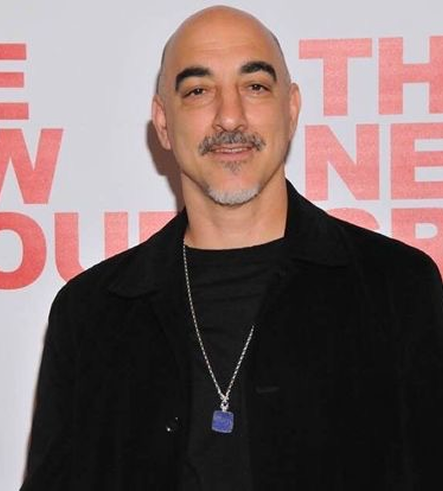
Seth Zvi Rosenfeld Autobiography
I grew up in New York, listening, watching, and taking notes. Stories were everywhere. On sidewalks, in bars, on subway rides home. I learned to write in the everyday grind—not in fancy schools. I learned it in the streets, through people, their voices, their lies, and their truths. I still work the same way: writing to catch life as it is, before it slips away. I always return to that first feeling: stories that connect, that cut close and stay with you.
Theatre
I didn’t grow up thinking I’d be a playwright. I just knew I had stories stuck inside me.
In my twenties, life wasn’t going well. Some things went wrong. Others, maybe, went right. Either way, I knew one thing—if I kept doing what I was doing, I was heading straight into the ground.
So I started writing. I didn’t have a plan. I didn’t go to school for it. But I knew what I’d seen. I knew what I felt. And I needed to put it somewhere.
I picked up a waiter’s job. It paid just enough to stay afloat. I spent the rest of my time writing. theater felt right. It was fast, direct, close. I found my way into some workshops—Ensemble Studio theater, Double Image, Angel theater. That’s where I started learning. People like Kate Long, Helen Mayer, Susan Golomb and Israel Horovitz didn’t just give me feedback. They gave me a chance.
My first play was a short called “The Blackeyed Brothers.” It got produced. It won the Samuel French award. That’s how I found my first agent.
Then came my first full-length play, “The Writing on the Wall.” It was staged at Westbeth theater. New Line Cinema bought the rights and hired me to write the screenplay. That was my start in film too.
From there, I kept writing plays. “A Brother’s Kiss” and “After the Marching Stopped” (later renamed Brothers Mothers and Others) were produced by Angel theater at Intar.
“Servy-n-Bernice 4ever” had a run Off-Broadway at the Provincetown Playhouse.
“A Passover Story” was commissioned by Joe Papp for The Public Theater.
“The Flatted Fifth,” “Everything is Turning Into Beautiful,” and “Downtown Race Riot” were all done with The New Group.
I also wrote some smaller plays. Quick pieces like “La Familia,” “My Starship,” and “PS: I’m glad you sent your hair” were staged with Naked Angels and the Hip-Hop theater Festival.
“Handball” was produced outdoors by SummerStage in New York.
With LAByrinth Theater Company, I developed “Summer with Dianne” and “House of Blue Robes.”
Now, I’m working on a new musical. It’s different, but the goal’s the same. To make something honest. To keep writing what I know.
Because that’s how this all started—and how it still keeps going.
Film
My first break in film came when New Line bought the rights to The Writing on the Wall. Not long after, Columbia picked up Servy-n-Bernice 4Ever. I had no real idea how things worked. I didn’t know you could write a movie, get paid for it, and still have it never get made. Or worse, see it rewritten by someone else. Still, it changed my life. I could breathe financially. But it also made me miss the control I had in the theater. I spent a lot of time developing scripts, fixing others, and working with major studios. But during that stretch, the only film that made it to screen with my name on it was Sunset Park, produced by Tri-Star and Jersey Films. Some people around me started pushing me to direct. So I did.
My first short was called Under the Bridge, a silent film with Mike Rapaport. It won a few awards and BRAVO bought it. Back then, they used to air short films between shows. That short got me invited to Sundance as a writing and directing fellow. It gave me the tools I needed to take the next step. That step was A Brother’s Kiss—my first feature as a director. It was based on my play. Nick Chinlund and Mike Raynor, who were both in the stage version, starred in it. Critics said it felt real—like the streets I knew growing up. I followed it with King of the Jungle, starring John Leguizamo, Marisa Tomei, and Rosario Dawson. Then came We Deliver, a web series about a 1990s cannabis delivery service in NYC—maybe one of the first of its kind. My films have screened at festivals like Venice and Deauville. I spent a decade focused on TV, but I’ve come back to film. My latest project is Sunday at Il Posto Accanto, with Victor Rasuk and Danny Hoch. Next up is Legit.
The film is called “A Brothers Kiss”, which was based on the Off-Broadway play and starred Nick Chinlund and Mike Raynor who both had appeared in the play. Reviews praised the performances and attributed my upbringing in creating “a realistic sense of street life with hardly a false note.” Next up, I wrote and directed the film, King of the Jungle, starring John Leguizamo, , Marisa Tomei and Rosario Dawson. I went on to write and direct what might well have been the first web series, it’s called “We Deliver”” and it follows the inner working of a 1990’s cannabis delivery service in NYC. My films have played in many major festivals including Venice and Deauville. I spent most of the past decade or so working in TV. But I recently fell back in love with filmmaking. My most recent film is Sunday at Il Posto Accanto, starring Victor Rasuk and Danny Hoch. Next up will be “Legit”.
Television
At some point, I noticed something. The best writing wasn’t in movies anymore. It was showing up on TV. HBO, FX, AMC, Showtime — they were all taking big swings. I joined the writers’ room on HBO’s How to Make It in America. I stayed for two seasons. That room taught me how TV writing really works — how ideas change, how fast things move, and how to work as a team.
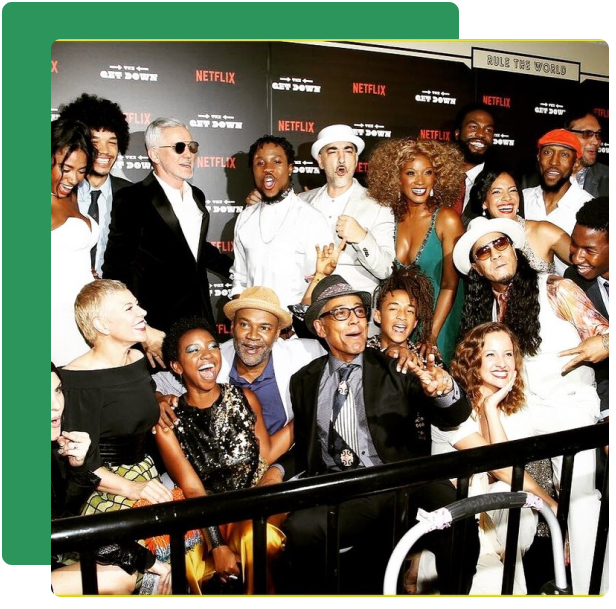
Since then, I’ve written and produced pilots for HBO, Showtime, FX, CBS, A&E, FOX, Netflix and Disney+. One of them, The Get Down, went to series on Netflix and was directed by Baz Luhrmann. More recently, I worked on Them for Amazon. That one got me a Writers Guild of America nomination for Outstanding Writing. TV keeps me sharp. It’s fast, loud, full of moving parts — and I like that.